



















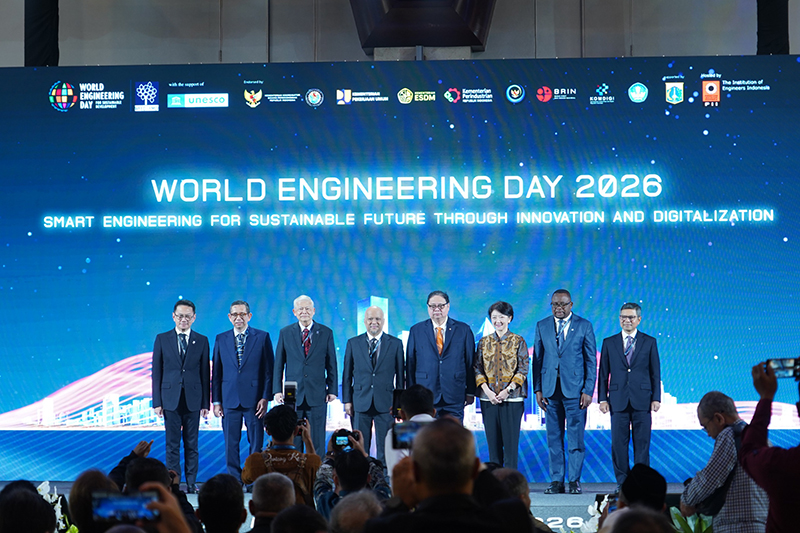
Jakarta, 4 March 2026. On 4 March 2026, engineers across the globe mark World Engineering Day for Sustainable Development (WED), the official International Day proclaimed by UNESCO and led globally by the World Federation of Engineering Organizations (WFEO). The main celebration event held from 4th to 5th March 2026 and hosted in Jakarta by the Institution of Engineers, Indonesia (Persatuan Insinyur Indonesia – PII), was officially opened at Balai Kartini under the theme “SMART Engineering for a Sustainable Future Through Innovation and Digitalization,” reinforcing the central role of engineering in advancing SDG 9: Industry, Innovation and Infrastructure.
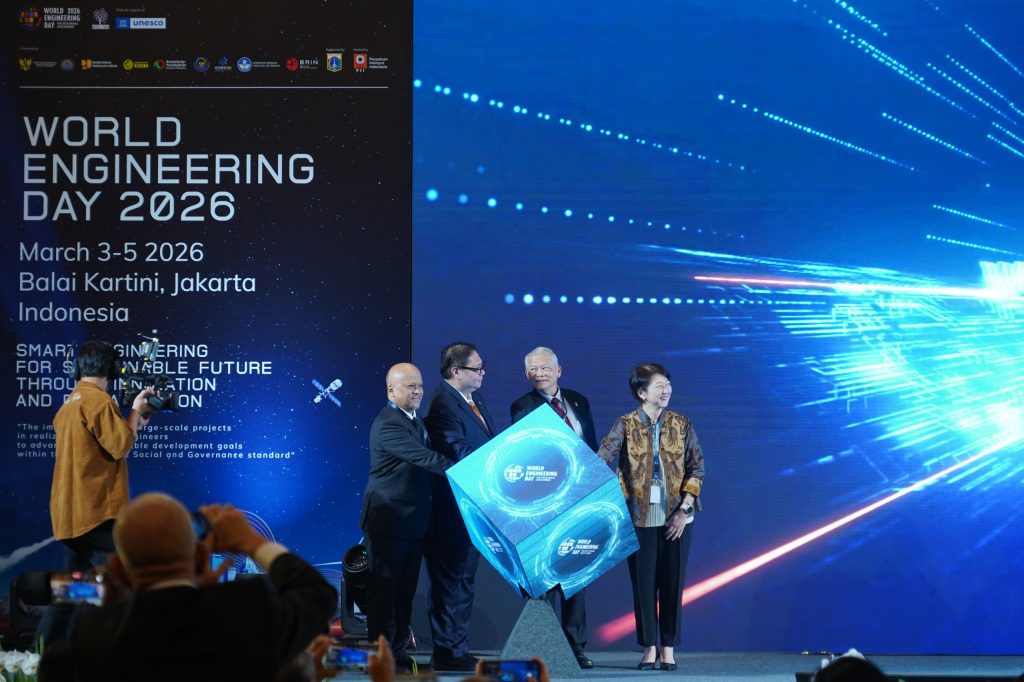
This international forum brings together approximately 600 delegates from 39 countries, including ministers, leaders of international organizations, academics, industry representatives, young engineers and students. WED 2026 serves as a strategic platform where engineering expertise, technology, and public policy converge to address global sustainable development challenges, while reaffirming Indonesia’s contribution to the global engineering landscape.
“World Engineering Day is a celebration of engineering contributions in solving global challenges, particularly those related to the Sustainable Development Goals (SDGs). The smart engineering we promote must be able to respond to real societal challenges,” said PII President Dr.-Ing. Ir. Ilham Akbar Habibie.
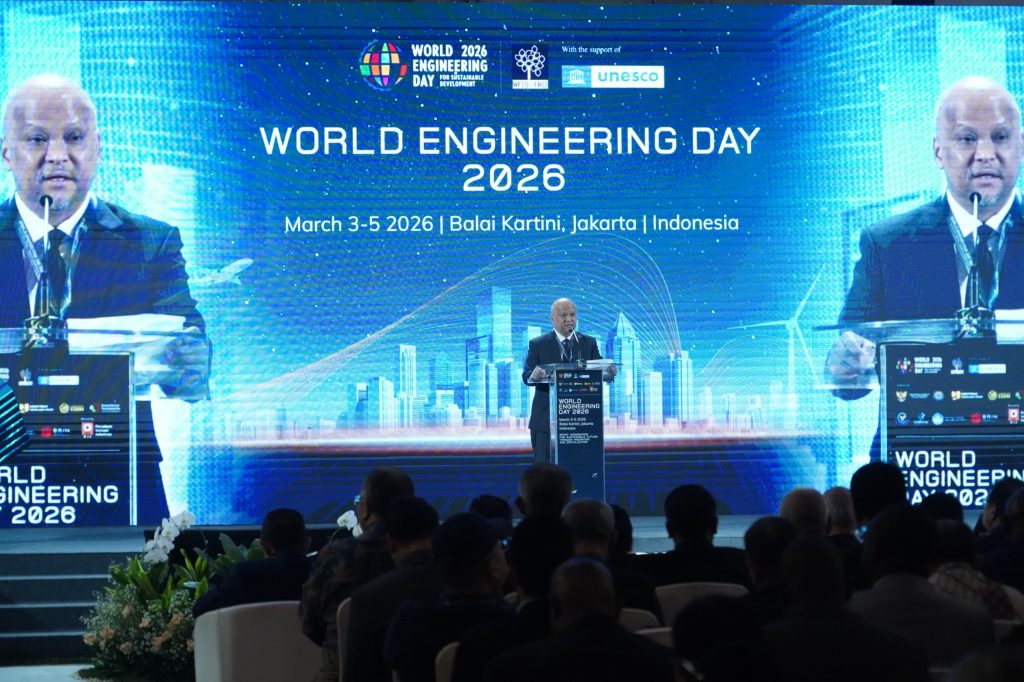
As a Federation of engineering organizations representing more than 30 million engineers from around 100 countries, WFEO entrusted Indonesia to host WED 2026. This trust makes Indonesia the first country in the Asia-Pacific region to host the event since WED was first commemorated in 2020.
As part of this global platform, WFEO also announced the winners of its WFEO Hackathon, a key event of the World Engineering Day celebrations, focussing on engineering students around the world. With 3000 registrations and 270 submissions from around the world, the winning team was “THINK: Smart Adaptive Streetlight System for Extreme Heat Resilience in the UAE” with a team from the American University of Sharjah – United Arab Emirates.
Overall the winning teams were from Africa, Asia and the Middle East, demonstrating the global reach of the competition which is the largest international competition of its kind in the world.
WED 2026 marks a series of concrete steps designed to strengthen the global engineering community and its contribution to sustainable development. These measures were announced by WFEO President, Dr. Seng-Chuan Tan, including:
- The launch of the WFEO Institute, a global center dedicated to advancing engineering excellence, policy leadership, and capacity‑building.
- The establishment of the World Academy of Engineering that will recognise distinguished engineering leaders and their contribution to the sustainable development goals.
- A new initiative allowing distinguished engineers to engage by supporting developing and small island countries facing sustainable development challenges including climate change and disaster risks reduction.
- The signing of a Memorandum of Understanding (MoU) with the International Research Center of Big Data for Sustainable Development Goals (CBAS) to help align engineering solutions with global sustainability goals, and open new pathways for joint research, training, and policy development.
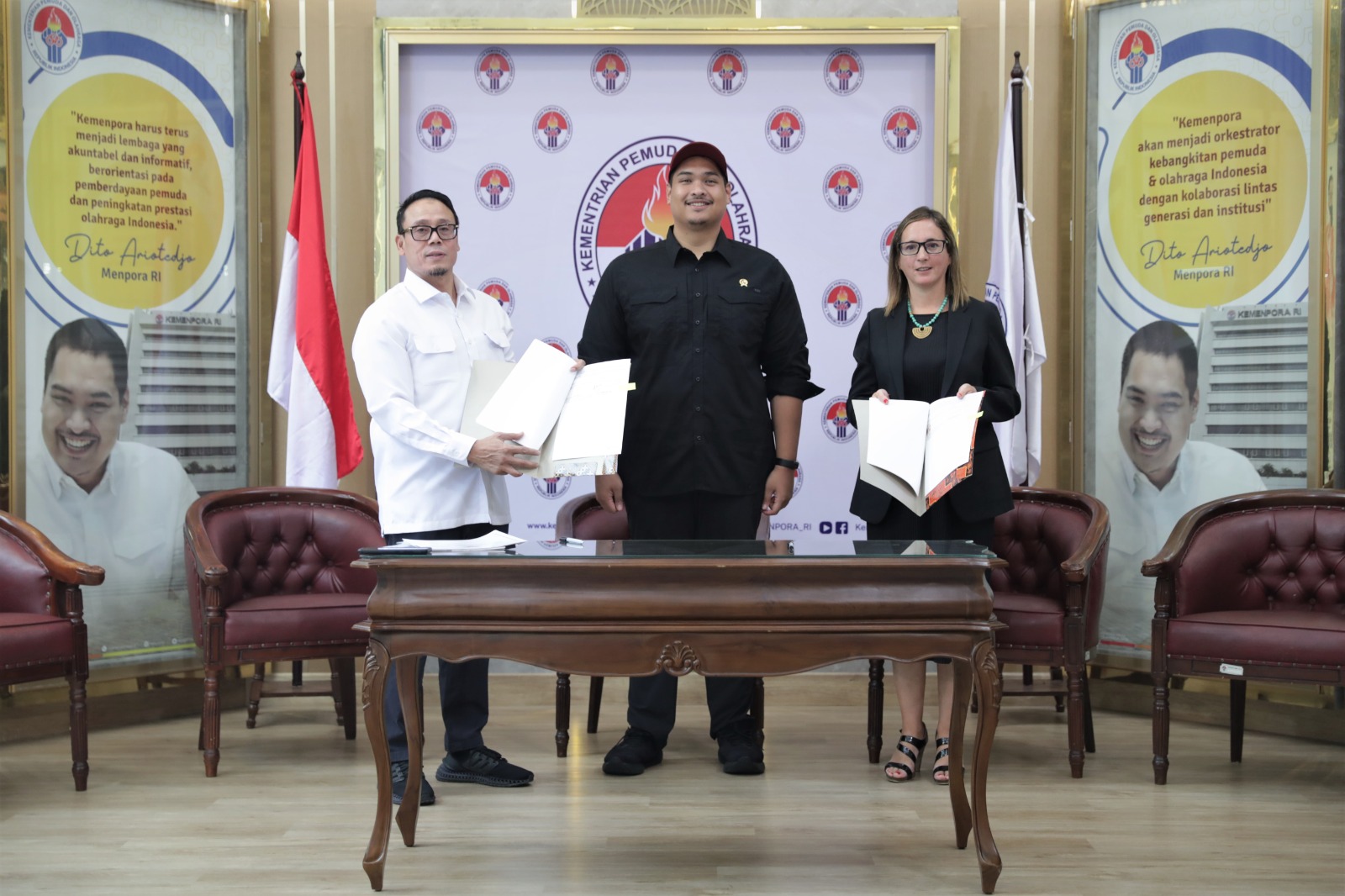
In this event, PII also signed the Memorandum of Understanding (MoU) with the Directorate General of Intellectual Property of Indonesia to optimize the collaboration effectiveness. Prior to actualizing the protection and utilization of intellectual property within the engineers innovation, based on Indonesia constitutional law.
PII President, Dr.-Ing. Ir. Ilham Akbar Habibie emphasized that WED is not merely an annual ceremony, but a global platform for collaboration to deliver concrete solutions.
He also emphasized that the use of Artificial Intelligence (AI) in engineering practices must continue to uphold digital literacy and ethical considerations, ensuring that innovation does not go beyond the values of humanity and sustainability.
High-Level Forum and Strategic Global Issues
The High-Level Segment on 4 March 2026 featured the Director of the UNESCO Jakarta Office, Ms. Maki Katsuno-Hayashikawa, as well as the President of WFEO, Er. Dr. Seng Chuan Tan, who emphasized the importance of global solidarity among engineers in addressing climate crises, digital transformation, and development disparities.
In his remarks, WFEO President Er. Dr. Seng Chuan Tan stated: “World Engineering Day 2026 underscores the indispensable role of engineering in solving humanity’s most urgent global challenges—from decarbonizing energy systems and strengthening climate resilience to advancing water security, sustainable materials, and digital infrastructure. Around the world, engineers are deploying AI‑enabled design, high‑performance analytics, and breakthrough low‑carbon technologies to create solutions at planetary scale. As the world faces accelerating urbanization and unprecedented environmental pressures, the engineering profession remains vital to building systems that are resilient, interoperable, and future‑ready for all.”
Three High-Level Panels highlighted the opening day:
- From Innovation to Large-Scale Implementation: Engineers Delivering Real-World Impact, discussing how innovation can be implemented at scale to generate tangible societal impact.
- Smart Engineering for a Sustainable Future, emphasizing the mobilization of science and engineering in supporting the Decade of Science for Sustainable Development.
- Global Trends on AI for Engineering Applications, reviewing developments and applications of AI across various engineering disciplines.
Prominent speakers included Coordinating Minister for Economic Affairs of the Republic of Indonesia Airlangga Hartarto and Coordinating Minister for Infrastructure and Regional Development Agus Harimurti Yudhoyono.
In addition, international figures from Africa, Europe, the Middle East, and Asia enriched the discussions, reflecting the strength of cross-regional collaboration within the global engineering community.
Airlangga Hartarto said the Indonesian government pushed 11,000 engineers to execute the semi-conductor development to provide green economics, within the period up to 2030. “Indonesia is the first country in ASEAN to carry out an engineering programme and UNESCO AI Readiness Assessment. This action is required to establish 1,8 million green jobs to contribute for the sustainable development goals.”
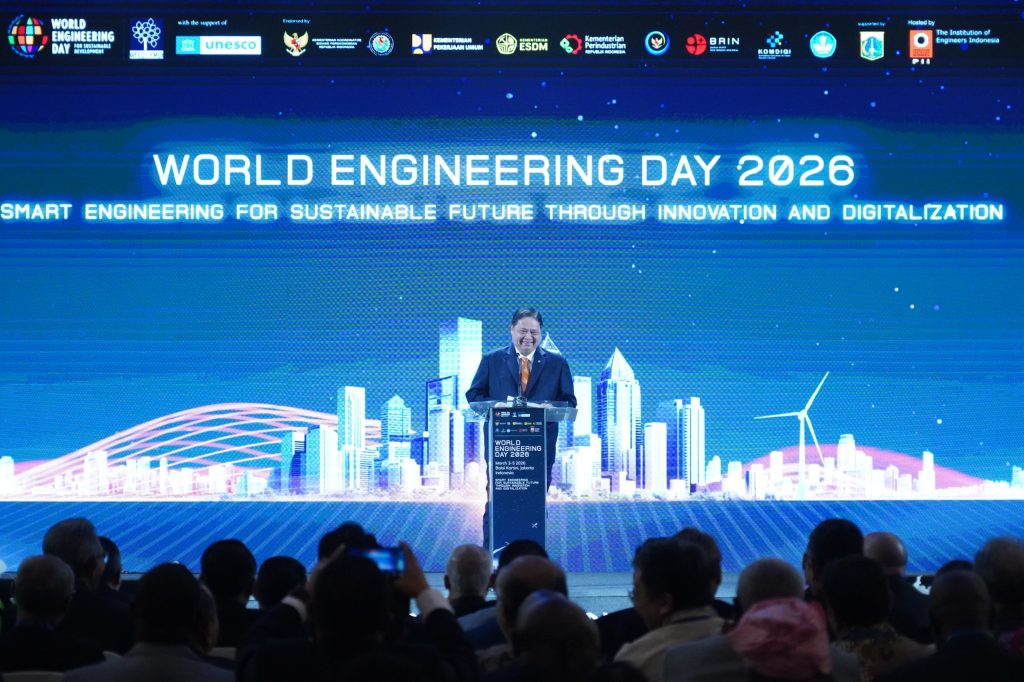
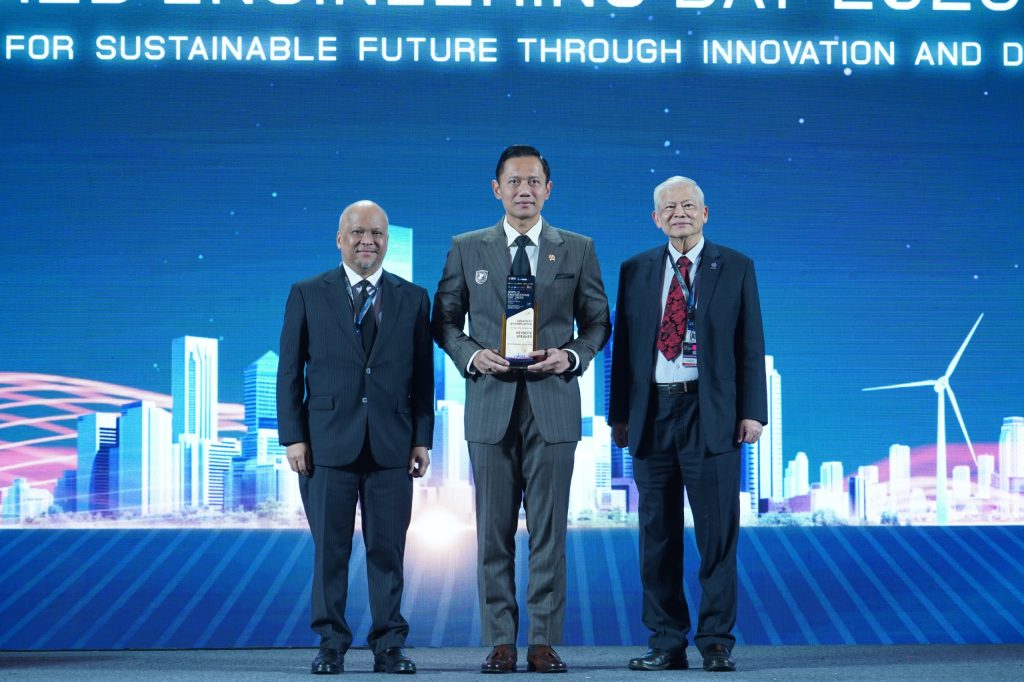
Agus Harimurti Yudhoyono agreed the theme of WED 2026 is appropriate for the situation in Indonesia. “The main thing is prosperity is distributed equally for everyone. With smart engineering toward a sustainable future, engineers can play a significant role.”
Technical Focus: Infrastructure, Digitalization, and Climate Resilience
On the final day, 5 March 2026, the agenda focused on technical depth and practical application under the theme Work, Technical Depth and Practical Application.
One key session introduced the 3rd UNESCO Global Engineering Report project, highlighting the role of engineers in accelerating sustainable transformation at the global level.
Three main panels then discussed:
- Smart Engineering for Sustainable Infrastructure,
- Integrated Innovative Digital-Green Systems for Economic Growth, Climate Resilience and Disaster Risk Management,
- Digitalization for Productivity and Sustainable Growth.
These discussions emphasized the importance of integrating digital and green systems to drive economic growth while strengthening resilience to climate change and disaster risks, issues that are increasingly relevant for both developing and developed countries.
The organization of WED 2026 in Jakarta is not only a source of national pride, but also a strategic momentum to demonstrate that Indonesia is capable of serving as a hub for global dialogue and an active actor in formulating inclusive, adaptive, and sustainable engineering solutions.
Through World Engineering Day 2026, Indonesia reaffirms its commitment to continuously promoting innovation, strengthening engineering human resource capacity, and ensuring that digital transformation advances in line with the principles of sustainability and social responsibility.